


How I successfully completed my longest race yet - the Montane Spine Challenger South ~ Fabienne Coulon

Updated: Aug 6, 2025
Once, I heard a runner say that “a race starts the day you register”. For the Spine Challenger South, that definitely resonated with me.
When I registered for this race in July 2024, I was still chasing a sub-2-hour finish at the Oxford Half Marathon. By the end of October, I had set my sights fully on the Spine after falling short of that half-marathon goal and recording a DNF at the Maverick Jurassic Coast Ultra. Those setbacks didn’t deter me. If anything, they ignited a fire within me. I was more motivated than ever to conquer the Spine Challenger South.
Training
To kick off my training, I lined up an ambitious series of three ultras in six weeks. First up was the Pilgrim Challenge, a two-day event covering 54km each day. I got through both days, but my feet paid the price with painful blisters. That was my first lesson: I needed to take better care of my feet and sort out my footwear.
I started to fine-tune my footcare strategy for the North Downs Ridge 50K three weeks later. I experimented with taping techniques and sock combinations. It was better, but not enough to get me through 108 miles in one go. So, I also tried new shoe models (with a bigger toe box and two sizes up) and got customised orthotics from my local podiatrist—a little miracle for my feet. Then came the Hundred Hills 50K, another three weeks later. That race taught me something new: I needed to train for hills. A lot.
From March onward, Kerry introduced super fun hill sessions on the treadmill, as I had no access to real hills around me.
Recceing the Course
The other cornerstone of my preparation was recceing the course. Between April 18th and June 1st, I spent four long weekends on the Pennine Way, exploring the Peak District and Yorkshire Dales. I covered about 135km of the 175km route, pack on, GPS in hand, and snacks at the ready. The first two weekends were blessed with fair weather. The third, not so much: rain, high winds, and even hailstones. Perfect for testing my waterproof gear.
I practiced night navigation and fuelling strategies. I made a point of tackling Fountains Fell and Pen-y-Ghent twice, since there was a good chance I’d be facing them in the dark. By June 1st, I had come to two clear conclusions: I was in love with the Pennine Way (especially the Yorkshire Dales section), and I really didn’t like the first 15km of the course—Jacob’s Ladder and Kinder Scout. Thankfully, that section would be behind me early in the race.
Tapering
The final two weeks were all about tapering and packing. With the hard training done, it was time to shift my focus to spreadsheets, zip-lock bags, and mandatory kit checklists. I spent a fair amount of time laying everything out, checking and re-checking my spreadsheet and gear.
Nutrition was another big consideration. I had tested various snacks and meals during my training and recces, but I had no idea what I’d actually want to eat after 24 hours on my feet. So, I opted for variety. Sweet, salty, soft, chewy, drinkable—I packed a bit of everything in the hope that something would appeal.
Tapering isn’t just physical. It’s also when your brain suddenly finds the time and energy to start asking questions like: Why am I doing this? Am I really ready? Did I train enough? It’s a strange mix of nervous energy and creeping doubt. I knew this was part of the process. Having Kerry as a coach made a real difference. A good chat with her helped put my doubts to bed and refocused me on the final details. It gave me the confidence I needed before heading to Edale.
The Day Before
I travelled to Edale on Friday morning by train. My first train was delayed, and when it finally got moving, it stopped two stations short of Sheffield. I eventually made it to Edale about two hours later than planned; thankfully still on time for registration.

As soon as I stepped off the train, Spine volunteers greeted me and escorted me straight to the village hall. That’s where the admin part of the adventure began. I was one of the “lucky” ones selected for a full kit check. Every item on the mandatory list was scrutinised, and I passed with flying colours. I then collected my bib, posed for the official tracker photo, and attended the race briefing. The key message from the briefing was simple, and it stuck with me throughout the entire race: “Be bothered!” Bothered enough to check you are still on course, bothered enough to look after yourself, and especially your feet (don’t wait until it’s too late). Bothered enough to eat and drink regularly…
That night, I stayed at the YHA in Edale. John, one of the volunteers—who would become one of only two runners to have completed all five Spine formats by the end of that week—drove me there and gave me a great rundown of how the morning shuttles to the start line would work. He also explained what to expect in the final moments before the race began.
Staying at the YHA turned out to be a smart move. The self-catering kitchen meant I could cook my own dinner and, more importantly, my own breakfast, which I’d tested during my recces. Eggs, bacon, toast, and marmalade had emerged as my favourite pre-race formula.
Race Day
I woke up early enough to do things properly. I took a good shower, taped my feet with care, cooked my go-to breakfast, and ate it in peace. I was on the first shuttle to the start line, with John as our driver. I don’t enjoy being rushed before a race, and it was even more the case that morning.
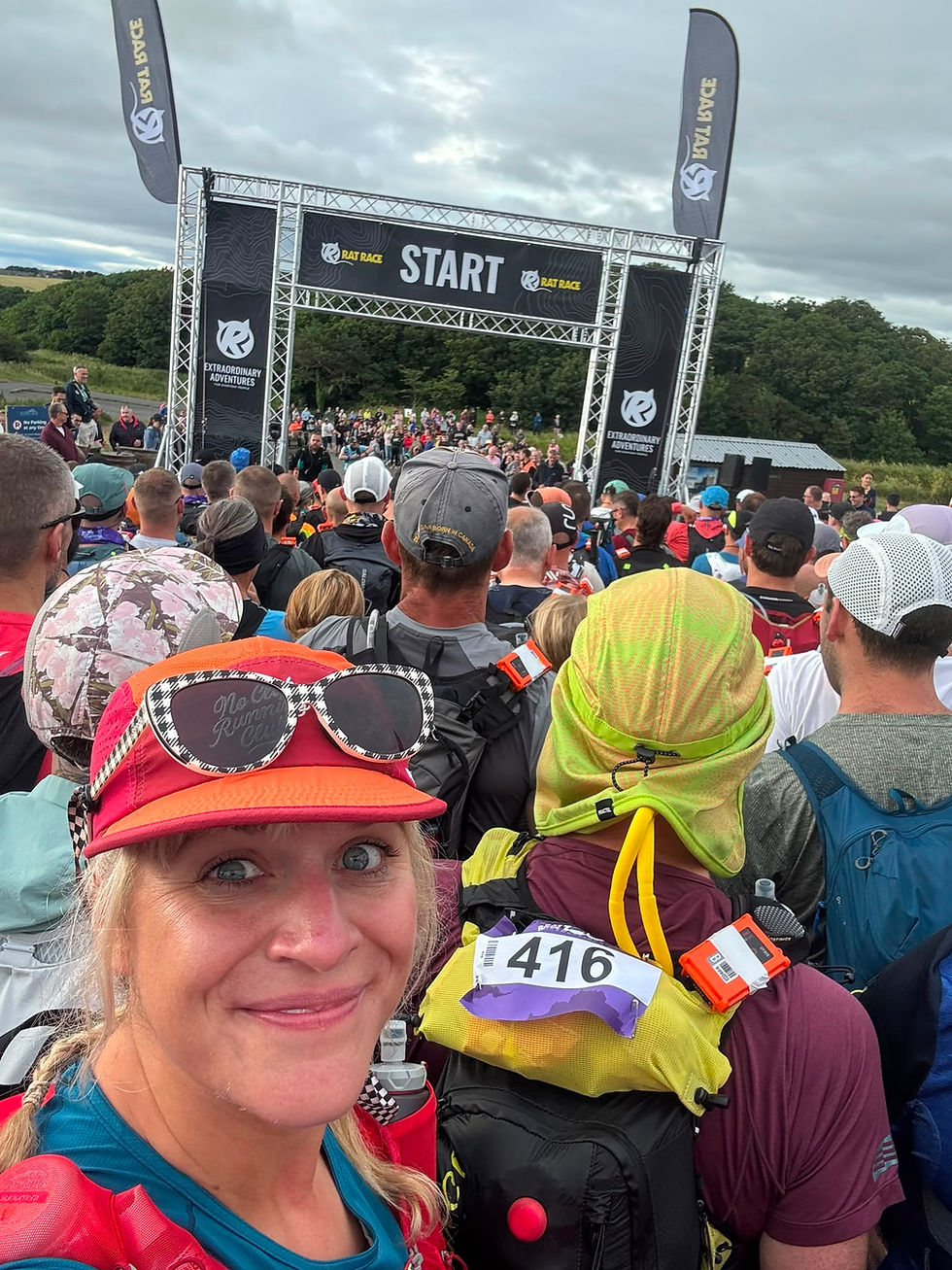
At the start line, I had my tracker taped securely to my pack and enjoyed a nice chat with other runners. It was hot and humid, probably my least favourite running conditions. But I had decided I wouldn’t let the weather bother me. It’s one of those uncontrollable things you just have to deal with. That said, I did not completely ignore the weather, and I made sure to carry 3 litres of water, knowing there wouldn’t be easy refills for quite a while.
We assembled behind the start line, and Kevin, the race director, gave us a few final words—“Be bothered!” Then, just like that, we were off.

On Kinder Scout, I fell into stride with one of the runners I’d spoken to before the start. We kept chatting, and before I knew it, Jacob’s Ladder and Kinder Scout, my least favourite parts of the course, were already behind me. I could now look forward to the remaining 160km or so. At that point, runners were still fairly bunched together. We leapfrogged each other along the trail, sometimes talking, sometimes just exchanging a nod, but always encouraging one another.
Snake Pass, Bleaklow Head, Torside Reservoir—the kilometres were adding up, and I was loving it! Between Torside and Black Hill, I found a few streams to top up my water and cool off by soaking my cap in the cold water.
When I reached Black Hill, I was looking forward to a cold Fanta Orange from the snack van by the A635. Unfortunately, as I descended from Black Hill, I watched the van drive off. No Fanta for me—at least, not yet.
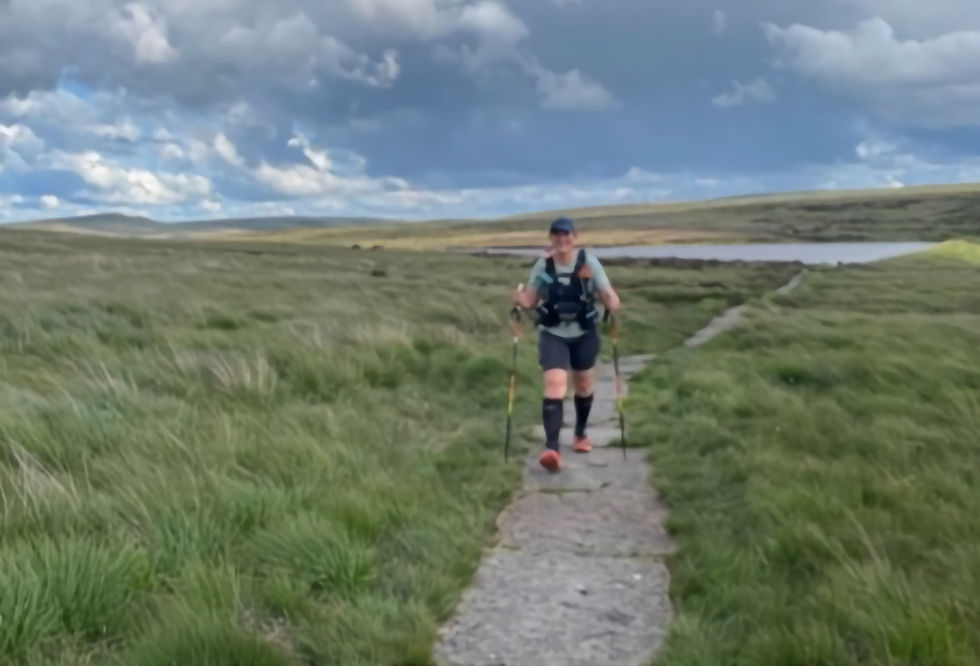
I had not recced the stretch between A635 and the canal in Hebden Bridge. So, I was now in unknown territory. But as the sun set, the route unfolded into a surprisingly pleasant section. There was also an unofficial rest stop organised by Oldham MRT at Brun Clough (where I finally got my Fanta) and a few kilometres later, there was Nicky's food bar, where I got a nice burger just in time for dinner.
Then came the climb from the canal up toward Hebden Hey. It felt endless. The descent to the Hebden Hey checkpoint in the dark was slippery and slow, but I made it just after midnight.
At the checkpoint, the plan was simple: get in and out. However, Hebden Hey was the only point in the race where I’d have access to my drop bag, so it was important to do all the essentials before setting off again. Knowing that fatigue would cloud my brain, I had written a checklist with very detailed actions. First up: plug in all my electronics. Then, fresh clothes, a proper meal (some decent pasta), and thorough foot care. Only one blister! Yes! Next, I restocked my food, repacked my kit, and finally passed the mandatory kit check before I could head out. All in all, I spent about 2 hours and 30 minutes at the checkpoint, slightly longer than I’d planned.
The climb back up from Hebden Hey to rejoin the Pennine Way was, surprisingly, shorter and easier than I remembered from the descent. It was still dark, but about an hour later, the sky began to lighten, and the trail slowly came back into view. That’s when I started to fall asleep while walking, something I had never experienced before. Thankfully, I’d spoken with Kerry about sleep strategy beforehand, and we’d agreed on two possible options: the micro nap or the power nap. After some trial (and error), I felt that a 9-minute power nap was the most effective option for me. Over the course of the race, I took five of these naps, usually lying down somewhere reasonably sheltered from the wind, with a timer set and a firm commitment to get back on my feet the moment it buzzed. It’s amazing how much clarity and focus you can regain in just nine minutes.
I arrived at the Cowling unofficial rest stop just in time for breakfast. They were serving a delicious bacon bap that set me up nicely for the day ahead.
From there, the kilometres continued to add up steadily. Lothersdale… Thornton-in-Craven… Gargrave, where I stopped to care for a new blister that was forming under one foot and refuelled with supplies from the local Co-op.
Then came Malham Cove, and with it, a sharp change in weather: heavy rain and colder temperatures. It was time to pull out my insulated jacket and waterproof.
I climbed Malham Cove alone. As it was the end of the day, there were no tourists anymore. I welcomed that peace and quiet. Near the car park between Malham Cove and Malham Tarn, I ran into Clo from the media team. She walked with me for a few minutes, and we had a short uplifting chat.

I reached Checkpoint 1.5 at Malham Tarn around 8pm. We were allowed a 30-minute break. I heated up a homemade couscous mix I’d been carrying, with hot water, and had a great chat with the volunteers and medics, who were encouraging and relaxed, as the checkpoint wasn’t busy.
As I left Malham Tarn, I hit two major climbs back-to-back. First up was Fountain Fells, under heavy rain, strong winds, and in the clouds at the summit. Some would say it was typical Spine weather. That’s where I experienced another first: hallucinations. All the rocks started to change into bright white faces, full of eyes, smiling at me. At first, I genuinely thought someone had painted them. But after a few more steps, I realised that it was actually my brain that was painting them, and I couldn’t help but laugh out loud.
The second major climb was Pen-y-Ghent. The rain had stopped, but the wind was still strong, and the fog was extremely thick. Between the hallucinations and the reflection of my headtorch bouncing off the mist, I could barely see a metre in front of me. The rocky scramble to the summit turned into a slow, careful climb. I struggled at times to figure out where to put my hands and feet, but I stayed calm. There was no reason to rush. I was still well within my planned time.
After descending Pen-y-Ghent, I reached Horton-in-Ribblesdale, and for the first time, it felt like the finish line in Hardraw was finally within reach. Only a few more hours to go. But I was drifting off again. So, I stopped for one last, short reset—a final 9-minute power nap.
When I got moving again, I needed something to help push me through the final stretch. So, I gave myself a small question, simple, but oddly powerful: “What if there was even just a 1% chance I could finish before 8am and see Kate setting off for the Challenger North?”

That woke me up fully. I started jogging. And before I knew it, I was increasing my pace. Apparently, I was going fast enough that my husband and daughter, who were tracking my dot so they could meet me at the finish, suddenly panicked, thinking they might miss me altogether.
In the end, I crossed the finish line in 48 hours, 45 minutes, and 28 seconds. I missed seeing Kate by 45 minutes, but I had come in well below my target time of 50 hours. More importantly, I had finished the Spine Challenger South, my longest and toughest race to date.

This was the most epic adventure I’ve ever had the privilege of completing.
The Spine Challenger South taught me just how much we have inside us when we choose to keep going. We are capable of more than we think, especially when we set our minds to something big. Looking back through the race photos, I’m smiling from ear to ear. Despite everything that might have been running through my head at the time, it’s clear that I was in my element. I was loving every minute.
I loved the challenge, the adventure, and the people I met along the way—the ever-cheerful volunteers, the medics and safety team who quietly looked after us all, the media crew who somehow made us look heroic, and of course, my fellow runners. Every nod, every word, every shared moment of silence, it all mattered.
And even though you run this race on your own, you never do it alone. There’s always a team in the background. I’m so incredibly grateful for mine:
Kerry, my coach—always listening and adapting my plan to my hectic life and on the day of the race, so supportive and always knowing exactly what I needed to hear. I loved listening to all her WhatsApp messages during the race.
Ryan, my PT, who helped me build the physical strength to keep going for more than 48 hours.
Gerard, my physio, who got me to the start line uninjured.
And most of all, my husband and two daughters, who supported me every step of the way, from registration, through training, and all throughout the race.
I’ll be back. Most likely for the Challenger North, and who knows… maybe even for the full Spine.
---wix---


Comments